Team Rocket set profile
Team Rocket from the Base series, released on 2000-04-24, includes 82 official cards and 83 total cards in the source data. That context matters because a large modern set, a compact older set and a promo-style release can lead to very different grading research.
Best by set still needs ROI
The best Team Rocket cards to grade are the ones with enough raw-to-graded spread to survive fees and grade downside. Card details provide the set structure; Kardive adds the ROI workflow.
Cards to review first
Start with recognizable or premium Team Rocket cards, then validate each one against raw value, graded prices and costs.
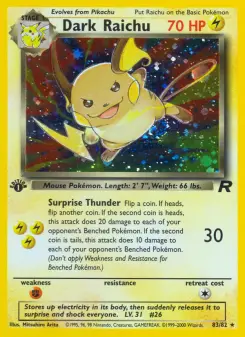
- Dark Raichu #83 - Rare, Lightning, illustrated by Mitsuhiro Arita
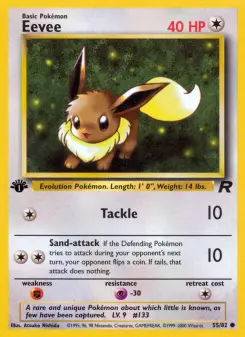
- Eevee #55 - Common, Colorless, illustrated by Atsuko Nishida
- Dark Vaporeon #45 - Uncommon, Water, illustrated by Mitsuhiro Arita
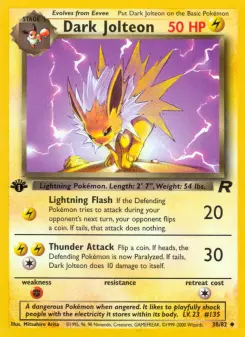
- Dark Jolteon #38 - Uncommon, Lightning, illustrated by Mitsuhiro Arita
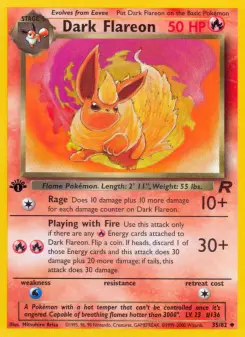
- Dark Flareon #35 - Uncommon, Fire, illustrated by Mitsuhiro Arita
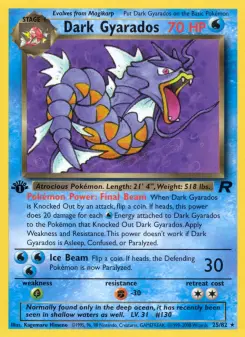
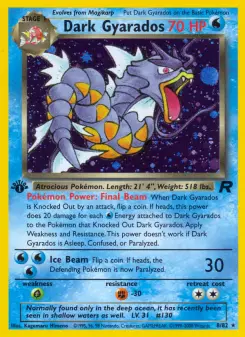
- Dark Gyarados #25 - Rare, Water, illustrated by Kagemaru Himeno
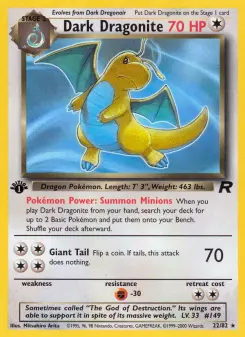
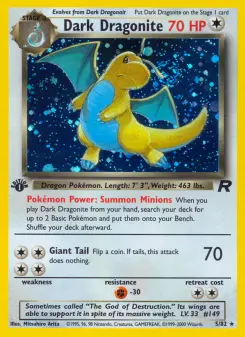
- Dark Dragonite #22 - Rare, Colorless, illustrated by Mitsuhiro Arita
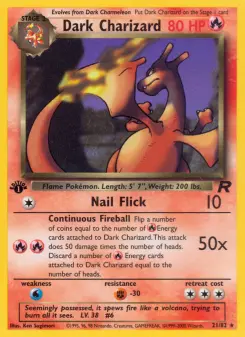
- Dark Charizard #21 - Rare, Fire, illustrated by Ken Sugimori
Why this list is not automatic advice
In the visible sample, rarity context includes Rare, Common and Uncommon; where type data is available, cards include Lightning, Colorless, Water and Fire. Illustrator data such as Mitsuhiro Arita, Atsuko Nishida and Kagemaru Himeno gives the pages more identity than name and number alone. Those identity signals are useful starting points, but every card still needs live raw value, graded outcomes and user-specific costs before it becomes a grading candidate.
How Kardive uses this context
Best Team Rocket Cards to Grade is most useful when it leads to a clear grading action. Kardive connects the research to calculator inputs, saved scenarios, watchlist follow-ups, alerts, portfolio context or opportunity review.
- Open the ROI calculator
- Compare raw and graded outcomes
- Save or duplicate a scenario
- Track the card when timing matters
What to check before grading
The same rule applies across the app: never judge a card only from its best graded sale. Include the raw alternative, grading costs, selling fees, grade probability and break-even grade.
- Raw value
- Graded prices by company
- Total cost engaged
- Expected value and risk
Account workflow
Anyone can research from the marketing pages and try the calculator preview. After login, Free users can save a few decisions. Pro is for heavier use: alerts, opportunities, portfolio analytics, exports and unlimited usage.