










PSA 10 is an upside case, not the baseline
The best PSA 10 Lost Origin candidates still need PSA 9 and lower-grade downside checked before submitting.
Pokémon grading decision tool
Review Lost Origin cards where PSA 10 outcomes may create meaningful grading upside.
EV
Expected value before grading.
ROI
Profit after all costs.
Risk
Grade downside made visible.


Set details
The set-level pages start from expansion details and card images, then organize them around the Kardive decision workflow: best cards to review, ROI candidates, PSA 10 upside and scarcity-style research.
Series
Sword & Shield
Release date
2022-09-09
Official cards
196
Cards listed
247
Cards from this set
The best PSA 10 Lost Origin candidates still need PSA 9 and lower-grade downside checked before submitting.
These Lost Origin card pages are useful starting points before opening the live calculator.
Lost Origin has 247 cards listed in the source sample. Even if the top grade creates strong upside, the calculator still needs to test whether PSA 9, PSA 8 or lower outcomes protect the user from overpaying.
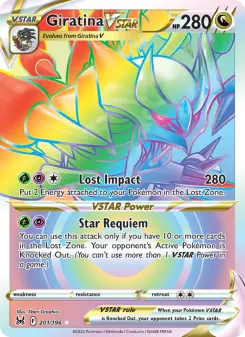
In the visible sample, rarity context includes Secret Rare, Holo Rare VSTAR, Radiant Rare and Ultra Rare; where type data is available, cards include Dragon, Psychic, Lightning and Colorless. Illustrator data such as the cards currently listed gives the pages more identity than name and number alone.
Best PSA 10 Lost Origin Pokémon Cards is most useful when it leads to a clear grading action. Kardive connects the research to calculator inputs, saved scenarios, watchlist follow-ups, alerts, portfolio context or opportunity review.
The same rule applies across the app: never judge a card only from its best graded sale. Include the raw alternative, grading costs, selling fees, grade probability and break-even grade.
Anyone can research from the marketing pages and try the calculator preview. After login, Free users can save a few decisions. Pro is for heavier use: alerts, opportunities, portfolio analytics, exports and unlimited usage.
How the pieces connect
Kardive turns market data and user assumptions into a grading decision users can revisit and improve.
FAQ
Kardive compares raw value, grading fees, shipping, insurance, selling fees and graded prices, then estimates profit, ROI, break-even grade, expected value and risk.
No. Kardive is a decision tool. It helps you decide whether to grade, sell raw, track, save or monitor a card.
Kardive works with PSA, CGC and BGS grade buckets, so you can compare grading outcomes without rebuilding the calculation every time.
Yes. The marketing site includes a calculator preview, and Free users can run a limited number of monthly calculations, save a few scenarios and start a watchlist after login.
Keep researching
Ready to test your next grading decision?